Rehearsal dinners
The night people actually talk to each other.
The wedding is scheduled to the minute and you will spend it being moved from one thing to the next. The rehearsal dinner is the one evening of the weekend where you get to sit down with the people who came furthest and have a real conversation. It is worth planning like it matters, because it is usually the part everyone remembers best.
The first decision
Who to invite, and how to get to a number.
Most couples start with a vague sense of "close family and the wedding party" and no number at all. Work through these four groups and you will have one in about five minutes.
1. Immediate family, both sides
Parents, siblings and their partners, and grandparents. Count them properly, including the plus ones, because this group is bigger than people expect once two families are added together.
2. The wedding party and their partners
Everyone standing up with you, plus whoever they are bringing to the wedding. Inviting the wedding party without their partners puts those partners alone in a hotel the night before, which nobody intends and everybody notices.
3. Anyone in the rehearsal itself
Your officiant, and readers or musicians who are at the run-through. They have given you their evening.
4. Out-of-town guests, if you want to
This is the group that turns a dinner for twenty into a dinner for sixty, so decide it deliberately rather than by drift. A common middle path is a seated dinner for the first three groups and an open invitation to everyone else for drinks afterwards.
The food
Do not repeat the wedding menu.
Two rules, and they both push the same direction.
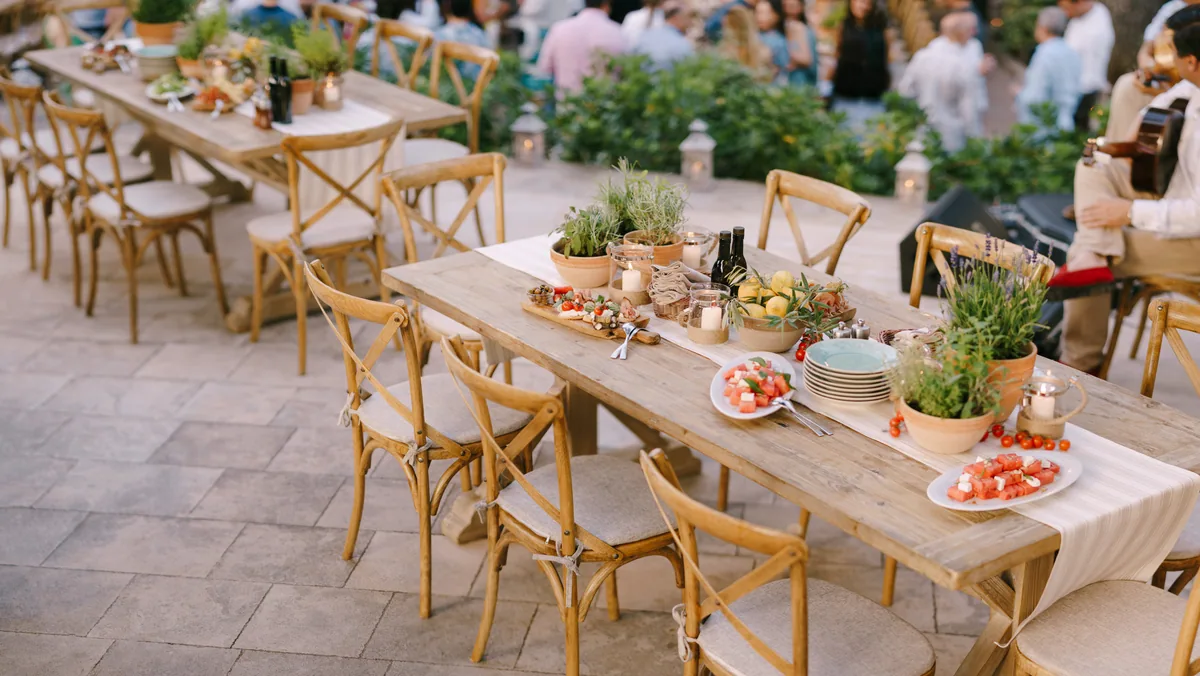
Serve it family style
Shared platters down the middle of the table do something a plated dinner cannot: they make people reach past each other, pass things and start talking. On a night whose entire purpose is two families meeting, that is the whole game. A plated dinner is a better wedding format and a worse rehearsal dinner one.
Make it different from tomorrow
If the wedding is a formal plated dinner, the rehearsal should not be. Guests who eat two similar meals in twenty-four hours remember one blur instead of two nights. Contrast is doing real work here, and it usually costs less as well.
How the night runs
Four hours, and end it on purpose.
Arrival and drinks, forty-five minutes
Straight from the rehearsal. This is when the two families meet properly, so give it real time rather than rushing everyone to their seats.
Toasts, before dinner
Traditionally the hosts open and the couple close. Doing them before the food rather than after keeps them short and means nobody's dinner goes cold while someone finds their notes.
Dinner, ninety minutes
Family style, unhurried, and long enough that people move seats and talk to somebody new.
End it early, and mean it
The single most useful thing on this page. Everyone at that table has a long day tomorrow, and the couple has the longest. Name a finish time when you invite people and hold to it. A rehearsal dinner that runs until midnight is a wedding day nobody enjoys.
Where
At Oak Barrel, or wherever you are already.
Oak Barrel Public House
Our own place in Milwaukee, and part of the same group as this kitchen. It has private space, the food comes out of a kitchen we run, and the whole thing is one conversation with one person rather than three.
Ask Alexa about capacity and available nights for your date, since rehearsals are almost always a Thursday or Friday and those fill first.
Somewhere else entirely
If your rehearsal dinner is at a family home, a rented venue, a hall attached to the church or anywhere else with a door wide enough, we cater it there.
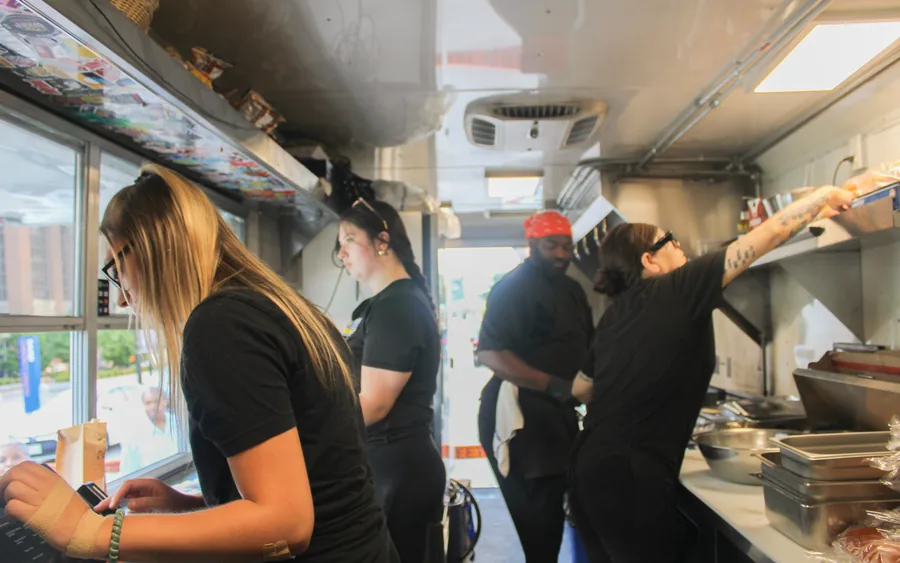
The same thing that makes our wedding catering worth booking applies to a rehearsal dinner: the food is cooked on site with our mobile kitchen rather than driven over in a hot box, so it goes out at the temperature and texture it was meant to.
Check a date
Tell us the date and the headcount.
Rehearsal dinners are almost always a Thursday or Friday, and those go first for the same summer weekends the weddings do. If your wedding date is set, check this now rather than in the spring.
Call Alexa on 262‑894‑8461 or email [email protected]. She runs sales and events, so you are talking to the person who will plan it.
Questions
Rehearsal dinners, answered.
Who is supposed to be invited to a rehearsal dinner?
At minimum: immediate family from both sides including partners, the wedding party and their partners, and anyone taking part in the rehearsal such as your officiant and any readers. Whether you extend it to out-of-town guests is the decision that turns a dinner for twenty into a dinner for sixty, so make it deliberately. A common middle path is a seated dinner for the core group and an open invitation to everyone else for drinks afterwards.
What night is a rehearsal dinner held?
Almost always the evening before the wedding, so a Thursday or Friday for most weddings. Those nights book up for the same summer weekends the weddings do, which is why it is worth checking as soon as your wedding date is set rather than in the spring.
Who traditionally pays for the rehearsal dinner?
Traditionally the groom's family, though in practice it is now split, hosted by whichever side offers, or paid for by the couple. Settle it early and in plain words, because it is the single most common source of awkwardness in the whole weekend.
How long should a rehearsal dinner last?
Around four hours, ending earlier than feels natural. Everyone at that table has a long day tomorrow and the couple has the longest. Name a finish time when you invite people and hold to it.
Should the food be different from the wedding?
Yes. Guests who eat two similar meals in twenty-four hours remember one blur rather than two nights. If the wedding is a formal plated dinner, make the rehearsal family style with shared platters, which also does more to get two families talking. It usually costs less as well.
When are the toasts?
Before dinner rather than after. Traditionally the hosts open and the couple close. Doing them first keeps them short and means nobody is waiting on a cold plate while somebody finds their notes.