Rehearsal dinner
- Oak Barrel Public House, the whole second floor
- 30 to 180 guests, family style, the night before

Free, and no email needed
A budget calculator and a timeline, plus the questions to ask and a spreadsheet to plan in. None of it requires your email.
Our own weddings
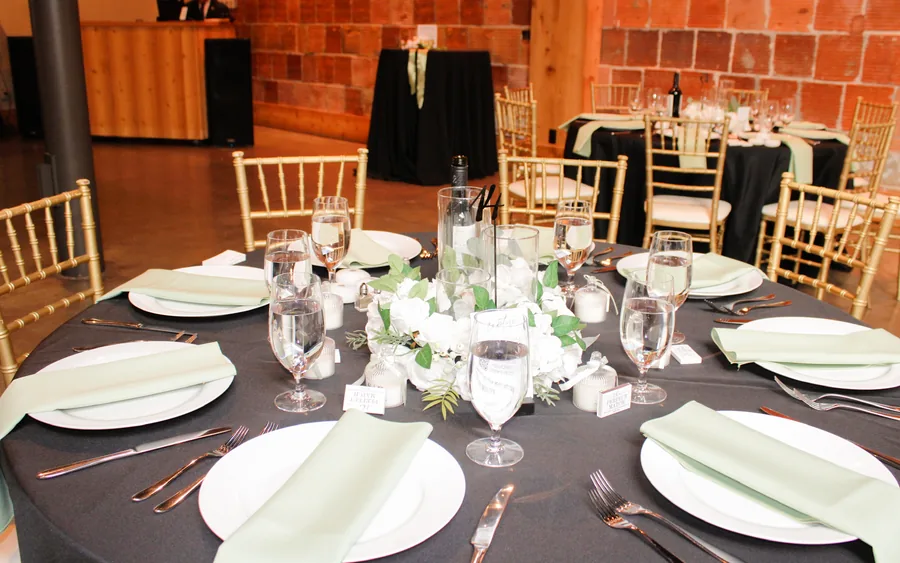
Every photograph is from a wedding we cooked. Each one links to the tool it sits above.



Tool one
Put in what you have and how many people you are feeding. The split below follows the proportions The Knot’s budget breakdowns have reported for years. None of these figures are our prices; Alexa sends a real number.
Everything, including the rings and the dress.
Adults and children, everyone who eats.
reception share, per guest
The reception line surprises people because it is not only food. It carries the venue, the catering, the staff who work the night, the rentals and the service charge. Couples who find a quote higher than expected were almost always comparing it to a food-only number in their head.
If it comes out tight, the lever that moves it is guest count rather than menu. Cutting twenty people moves more money than cutting a course, and it is the only change that reduces every line at once: less food, less bar, fewer staff, fewer chairs, fewer centerpieces, a smaller room.
Before you sign anything
Including us. If a caterer will not answer these plainly, that is your answer. The vendor guide has the questions for everyone else: the venue, the bar, the DJ, the florist.
On site, or in a kitchen somewhere else and driven over? If it travels, ask how long it sits between the stove and the plate. Hours are common; ours is minutes.
Those are two different things and they get confused. Ask what the percentage is, what it covers, and whether the staff receive it.
The person selling you the wedding is not always the person running it. Ask for a name.
Ask for the final count deadline in writing, and what it costs to move up or down after it.
Linens, china, glassware, cake cutting, coat check, travel, overtime, tastings. Get the list of exclusions before you compare two quotes, because the cheaper quote is often just the shorter list.
Gluten, dairy, nuts, vegan, halal, kosher. Ask how they handle it, not whether they can. Everyone says they can.
A caterer who can walk you through the ninety minutes around cocktail hour and dinner service, in detail, without notes, has run a lot of weddings. One who cannot has not.
Tool two
Check things off as you go. This page remembers where you are on this device so you can come back to it.
Take it with you
The calculator above gives you the starting split. The spreadsheet is what you plan in: every category broken into line items, columns for quoted, paid so far and still to pay, and a running total that says where you stand against the number you began with.
Every line is grouped the way the quotes arrive, and a cell at the top tells you in one glance whether you are over or under. It opens in Excel, Numbers and Google Sheets. No macros, nothing to install.
One building, one call
If the wedding is in Milwaukee, one address covers the night before, the beds and the ride: Oak Barrel, the apartments above it, and our Milwaukee wedding shuttle.
Questions
Our number comes from your headcount, menu and service style. For scale, The Knot’s 2025 Real Weddings Study puts Midwest catering at $62 to $123 a head with a national average of $80.
Nine to twelve months for a Saturday between May and October, the peak season here. Off-season and weekday dates are far easier, and three to six months is often enough.
Inside six months on a summer Saturday? Call rather than email. The answer depends entirely on what is still open.
About 35 percent for the reception itself: venue, catering, staffing and rentals. The bar is another 10, so about 45 percent together. It is by far the largest line, which is why it moves more than any other number in the budget.
Usually, but by less than people expect. A buffet needs more food produced because portions are not controlled, and it needs attendants on the line. A plated dinner needs more servers in the room.
The bigger saving in a buffet is often time, not money. Family style sits between the two and reads warmer than either.
A caterer coordinates the food, the bar and the service timeline. A planner coordinates everyone, the caterer included. Past about four vendors, with a venue that supplies no coordinator, a day-of coordinator usually earns its line. Ask your caterer what they do and do not run; a straight answer shows the gap.